Books, Fees, Uniforms, Transport and Arbitrary School Rules: Kashmir’s Parents Are Being Bled Dry as Authorities Issue Orders, Form Committees and Fail to Deliver Visible Relief
By: Zulfikar | 03 November 2026
Srinagar: The new academic session has barely begun, and Kashmir is already hearing the familiar cries of distressed parents from every corner of the Valley.
“We are being looted.”
“We are being stripped alive.”
“Where are the authorities?”
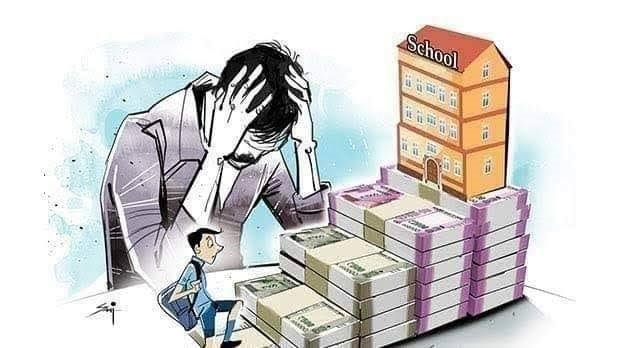
From Srinagar to Sopore, Baramulla to Kupwara, Budgam to Pulwama and Anantnag, the complaints sound remarkably similar. Expensive textbooks, changing publishers, confusing curricula, rising fees, costly uniforms, transport charges and a growing list of school-specific demands have once again turned the beginning of an academic session into a financial nightmare for thousands of households.
For parents, this is no longer an isolated grievance. It has become an annual ordeal.
The moment schools announce admissions, booklists and fee schedules, families find themselves running from one bookstore to another, comparing prices, arranging money and trying to understand why a particular set of books is compulsory, why another publisher has replaced the previous one and why additional charges keep appearing.
And the most frustrating part?
The authorities have known about these complaints for years. The government has issued circulars, appointed committees, announced inspections and made promises. Yet, when another academic session arrives, parents find themselves fighting the same battle.
Is the administration unable to control the situation, or is it simply unwilling to confront the powerful interests operating within the private education sector?
That is the question Jammu & Kashmir’s Education Minister, School Education Department, JKBOSE and district administrations must answer.
A Business Built Around Parents’ Helplessness?
Let us look beyond the routine complaints.
A recent investigation by Greater Kashmir, published on November 3, 2026, estimated the annual textbook expenditure in Jammu & Kashmir at approximately ₹240 crore.
The calculation was based on an estimated six lakh private-school students spending an average of ₹4,000 each on textbooks annually.
That is an estimated household expenditure, not verified industry profit. But even as an estimate, it highlights the enormous financial stakes involved.
And textbooks are only the beginning.
Uniforms, shoes, sweaters, stationery, transport, activity charges, annual fees and other school-related expenses add further pressure.
For a family with two or three children, the cumulative bill can become frightening.
Parents allege that certain schools prescribe books available through limited outlets, change publishers frequently and direct families towards particular booksellers. One parent quoted in the November 3 investigation claimed that a kindergarten book set costing ₹2,500 to ₹3,000 at specified shops could be purchased for around ₹1,500 in the open market.
That comparison needs an independent price audit. But it raises a question that cannot be brushed aside:
If the same books are available elsewhere at substantially lower prices, why should parents be directed towards expensive outlets? Who benefits from restricting their choices?
The textbook market may be legitimate. Publishing, distribution and retail are legitimate businesses. But the moment academic requirements become a means of restricting consumer choice or extracting undisclosed commercial benefits, the government has a duty to investigate.
Parents should not have to pay a premium simply because a school has prescribed a particular publisher.
Every School Its Own Republic: Who Has Given Them This Freedom?
Perhaps the most disturbing feature of Kashmir’s private education sector is the apparent absence of consistency in how academic and financial requirements are communicated and implemented.
One school prescribes one combination of textbooks. Another follows a different list. A third introduces additional workbooks. Another changes publishers. One institution announces new charges, while another issues its own directions regarding uniforms, activities and other requirements.
Academic flexibility is not the problem. Schools should be allowed to adopt effective teaching methods and supplementary resources within applicable regulations.
But flexibility cannot mean that every institution becomes a law unto itself.
Affiliated schools have to comply with the academic requirements of their respective Boards. The Jammu & Kashmir and Ladakh High Court, in its June 6, 2026 judgment in the Private Schools United Front case, upheld JKBOSE’s authority to prescribe textbooks for affiliated institutions in the dispute concerning Classes VI to VIII.
The ruling reinforced the principle that affiliation comes with statutory obligations.
So why are parents still confused about what their children are required to study?
Why is there no easily accessible, school-wise disclosure of prescribed books, publishers, editions and supplementary material?
Why should parents have to discover academic requirements through informal instructions and bookstore lists?
JKBOSE must explain whether it is monitoring actual textbook compliance or merely issuing academic directions and assuming that schools will follow them.
The Board cannot be a silent spectator when parents repeatedly question the consistency of textbook prescriptions.
The Government Knows. The Circulars Exist. So Where Is the Enforcement?
The administration cannot claim that the problem has suddenly appeared.
On April 6, 2023, the Directorate of School Education Jammu issued instructions addressing complaints about private schools compelling parents to purchase books, stationery and uniforms from particular shops.
The directions required schools to:
-
Publish prescribed subjects and textbooks on their websites.
-
Avoid making books beyond prescribed requirements compulsory.
-
Allow parents to purchase books and uniforms from the open market.
-
Avoid directing families towards particular vendors.
-
Ensure monitoring by Chief Education Officers and action-taken reporting.
The instructions even warned of consequences, including action relating to recognition and NOCs.
The High Court judgment of June 2026 further documented earlier departmental communications of March 2023. Those communications had directed education officers to investigate parental complaints about private publishers and unapproved textbooks.
In other words, this is not a regulatory blind spot that nobody has noticed.
The government has been receiving complaints, issuing instructions and asking officials to investigate them for years.
Then why does the same controversy return?
Why are parents still reporting that schools direct them towards selected booksellers?
Why have the authorities not publicly identified the institutions found violating these instructions?
Why are action-taken reports not being placed before the public?
If the instructions are being followed, the government should publish evidence of compliance. If they are being violated, it should publish the action taken.
What is the point of issuing an order if nobody is held accountable for ignoring it?
July 2026: Another Audit Mechanism, Another Test for the Education Department
On July 9, 2026, the School Education Department issued Circular No. 07-JK(Edu) of 2026, establishing a four-tier mechanism for academic evaluation, content verification and periodic auditing of books and educational material.
The structure included institutional committees, district-level review committees, directorate-level quality assurance committees and a departmental review committee.
The circular provided a framework for annual scrutiny and reporting, with successive deadlines extending up to July 31, 2026. It also placed responsibility on institutional heads and supervising authorities.
This was an important administrative step.
But it must not be confused with a comprehensive audit of textbook prices or commercial relationships between schools and publishers. Its central focus was academic scrutiny, content verification and the evaluation of educational material.
That distinction makes the next questions even more important.
-
How many private schools completed the required academic audits?
-
How many booklists were examined?
-
How many schools were found prescribing material outside applicable requirements?
-
How many district-level reports were submitted?
-
Did the Directorate identify recurring violations?
-
What action followed?
The reporting deadlines have passed.
Where are the findings?
If the government has collected this information, why is it not publicly available? If schools have failed to comply, what action has been initiated?
A four-tier committee structure means little if the final outcome remains hidden in departmental files.
October 14: Education Minister Speaks, But Will Parents See Action?
On October 14, Education Minister Sakina Itoo publicly addressed the controversy.
Her position was clear: private schools should not direct parents to purchase textbooks from particular booksellers. Parents must have the freedom to buy books from whichever outlet they choose.
She also defended supplementary books when they genuinely improve children’s knowledge, but warned that additional material should not be imposed merely as a means of making money from parents.
The minister announced a proposed committee involving representatives of parents’ associations, private schools and NGOs to examine complaints and recommend action where violations are established.
The statement was welcome. But Kashmir’s parents have heard assurances before.
The question is no longer what the minister intends to do. The question is what has actually happened since October 14.
Has the committee been formally constituted?
Who are its members?
Has it started receiving complaints?
What is its deadline?
Will it examine the financial relationships between publishers, booksellers and schools, or will its mandate be restricted to complaints about designated vendors?
Will the committee publish its findings?
And most importantly, will it have a mechanism to ensure that parents who have already paid unjustified charges receive appropriate relief?
A ministerial statement cannot substitute for an enforcement mechanism.
Minister Sahiba, parents need more than assurances. They need to see the first school being held accountable if a violation is established.
₹240 Crore and the Missing Price Audit
The textbook expenditure estimate deserves another look.
The November 3 report used approximately six lakh private-school students as its calculation base. However, the Ministry of Education’s UDISE+ 2024-25 data records 12,55,338 students in private unaided recognised schools across Jammu & Kashmir.
These are different statistical bases and reporting periods. The figures cannot be directly compared without explaining their coverage.
The government should clarify the actual number of students enrolled in the relevant categories of private schools and publish an independently verifiable estimate of annual textbook expenditure.
But the larger issue is pricing.
Who is checking whether the printed maximum retail price is being respected?
Who is comparing the prices of identical books across different retailers?
Who is examining wholesale supply arrangements?
Who is investigating allegations that some schools direct parents towards selected vendors?
And has any independent authority examined whether commissions, rebates or other financial incentives influence textbook selection?
These questions are particularly important because the FFRC’s mandate to regulate school fees does not automatically amount to a comprehensive audit of the retail textbook market.
The administration needs to bring JKBOSE, the School Education Department, FFRC and consumer-affairs authorities together.
If ₹240 crore is being spent by families on textbooks, surely the government can spare the resources to establish where that money goes and whether parents are being charged fairly.
Fees, Uniforms, Transport: The Financial Squeeze Does Not End at the Bookshop
Textbooks are only one part of the problem.
Parents also complain about rising tuition and annual fees, expensive uniforms, transport charges, activity fees and other payments that appear throughout the academic year.
There is already a statutory mechanism for private-school fee regulation.
The FFRC’s official records show that the Jammu & Kashmir Private Schools Rules, 2022, require schools to submit their fee structures for approval. Revisions require prior approval of the competent committee.
In July 2025, the FFRC issued a notice concerning 153 private schools in Baramulla that had allegedly failed to submit the necessary fee-regulation documents. The notice warned of possible action under the applicable law, including restrictions on fee collection.
The committee has also published directions concerning transport fees, advance fee collection and other financial matters.
This proves that the regulatory machinery exists.
But parents need to know whether it works consistently.
Why do complaints about excessive charges continue?
Are approved fee structures being displayed publicly?
Are schools collecting payments under heads that have not been approved?
Are parents receiving itemised receipts?
Are transport charges being calculated transparently?
Are schools being inspected after complaints?
The government must stop treating tuition fees, textbook costs, uniforms and transport as completely disconnected issues.
For a household, they are all part of one education bill.
A school may have an approved tuition fee structure, but that does not automatically justify every additional financial demand made during the academic year.
The administration must examine the cumulative burden on families.
The Silent Victims: Salaried Families, Pensioners and the Middle Class
The people bearing the greatest pressure are not necessarily those with the highest incomes.
They are government employees, private-sector workers, pensioners, small traders, daily-wage earners and lower-middle-class families who struggle to balance household expenses.
For a family with two children, the beginning of an academic session can mean paying admission-related charges, purchasing two sets of textbooks, arranging uniforms, paying transport fees and meeting other school requirements within a few weeks.
For families with three children, the burden can become considerably heavier.
Many parents do not challenge school instructions because they fear their children might suffer embarrassment, discrimination or unnecessary difficulties.
That is an unhealthy relationship between an educational institution and the family it is supposed to serve.
A school must never use a child’s academic future as leverage against a parent’s financial concerns.
Nor should a student feel inferior because their parents cannot afford an expensive supplementary book or school accessory.
Education is supposed to create opportunities, not deepen economic divisions.
Who Will Bell the Cat?
Let us be clear. Private schools are not the enemy of education. Many institutions provide valuable services, employ teachers, maintain infrastructure and help educate thousands of children.
They deserve financial sustainability and the freedom to maintain academic standards within the law.
But that freedom cannot become a licence for arbitrary demands.
Nor can the government hide behind the argument that private institutions have operational expenses.
Parents have expenses too. They have salaries to manage, household bills to pay and children to educate.
The responsibility of regulation is precisely to maintain a fair balance between the financial sustainability of schools and the legitimate interests of families.
What Kashmir needs now is not another round of statements.
It needs action.
Seven steps the government must take immediately
1. Publish school-wise booklists: JKBOSE and the Education Department must make prescribed textbooks, publishers and editions publicly accessible.
2. Conduct an independent textbook price audit: Examine retail prices, wholesale rates, printed MRPs and alleged differences between designated outlets and open-market sellers.
3. Investigate vendor arrangements: Examine complaints of exclusive supply arrangements and any financial relationships between schools, publishers and booksellers.
4. Publish July 2026 audit findings: Release district-wise compliance reports under Circular No. 07-JK(Edu) of 2026.
5. Disclose the October 14 committee’s status: Publish its constitution, membership, mandate, complaint mechanism and reporting deadline.
6. Strengthen FFRC enforcement: Make approved fee structures publicly accessible and take action against established violations.
7. Create a time-bound parental grievance portal: Every complaint should receive a tracking number, a responsible investigating officer and a deadline for resolution.
There must also be consequences for officials who repeatedly fail to enforce existing directions. Accountability cannot stop at school gates.
The Government Must Answer the People
The Education Minister must explain why a fresh committee was necessary when earlier directions and monitoring mechanisms already existed.
JKBOSE must clarify why parents continue to face confusion over textbook prescriptions despite the Board’s statutory authority.
The School Education Department must disclose what happened to the July audit exercise.
The FFRC must explain how it is addressing financial demands that fall outside approved tuition structures.
Chief Education Officers must tell parents how many inspections they have conducted and how many violations they have established.
And the district administrations must stop waiting for media reports to remind them that their responsibility is to protect the public.
The administration cannot be active only when it comes to issuing instructions. It must also demonstrate the ability to enforce them.
If the authorities know the rules are being violated, why are the violators still operating without visible consequences? If they do not know, what exactly are their monitoring teams doing?
These are questions that deserve answers, not another official assurance.
Education or Extortion? Kashmir Cannot Afford Another Year of Silence
The beginning of an academic session should bring excitement into homes. Children should look forward to new classrooms, new lessons, new friendships and new opportunities.
Instead, thousands of parents are once again calculating bills, visiting bookstores, questioning school instructions and wondering how much more they will be expected to pay.
The ₹240-crore textbook estimate has brought the scale of the issue into sharper focus. But the real controversy is much bigger than a market valuation.
It is about a system in which parents feel powerless, schools are accused of operating with their own interpretations of the rules, and regulatory institutions struggle to demonstrate that their orders have made a meaningful difference.
The government has had years to address these complaints. It has the laws, the departments, the committees and the authority.
What it needs now is the political will to act.
Enough of circulars. Enough of committees. Enough of promises that disappear after the cameras are switched off.
If a school is violating the rules, investigate it. If a bookseller is overcharging, examine the evidence. If a publisher is benefiting from an improper arrangement, establish the facts. If an official is failing to perform their duty, hold them accountable.
And if the allegations against particular institutions are unfounded, establish that through a transparent investigation.
The private education sector cannot be allowed to operate beyond scrutiny, and the government cannot continue to outsource its responsibility to committees.
Kashmir’s parents are not asking for free education. They are asking for fair education, transparent charges, freedom of choice and a government that stands by its own rules.
The question is no longer whether the education system needs intervention.
The question is whether anyone in authority has the courage to confront the interests that stand in its way.
Who will finally bell the cat? Or must Kashmir’s parents prepare themselves for another academic session of being fleeced?